Immediate loading — dental implants and prosthetics
Immediate loading, or loading within a few hours, is possible only in special cases and with careful planning.
The precondition for the long-term, lasting success of implants is that they heal securely and osseointegrate, which happens as the implant becomes anchored in the bone. The bone needs several months to form this firm bond. During that time the implant should not be loaded and should be protected from movement. Loading an implant too heavily during the healing phase generally leads to problems, up to and including the loss of the implant.
Immediate restoration
In an immediate restoration a provisional restoration is fixed to the implant straight after placement and exchanged for the definitive one after a healing period determined individually. The implants heal under normal chewing function. The provisional crown is shaped so that it is loaded little or not at all while chewing. Here too the quality and quantity of the bone available and the primary stability are decisive. Primary stability is an important criterion for whether an immediate restoration can be carried out with a good prognosis.
A concept using tilted implants opens up new possibilities for immediate restoration. With this technique the posterior implants are placed at an angle of up to 35 degrees. Specially developed angled abutments allow the restoration to be fixed on just four implants. The particular characteristics of the implants (a low profile, various angulations) and of the abutments make immediate loading with a restoration possible. The concept is suited to the immediate restoration of an edentulous upper or lower jaw. The success and survival rates of implants placed at such an angle are said to be comparable with those placed conventionally.
Between wish and feasibility
Immediate loading – at the limits of implantology
Immediate loading of implants, or loading within a few hours, is possible only in exceptional cases and with special planning. The indication is tightly limited, since the long-term success of implant treatment must not be jeopardised by loading too early. For the edentulous lower jaw there are restoration options that allow immediate full loading; in that case the implants are splinted together. With immediate loading the full chewing load reaches the implant. This is possible where several implants are placed and splinted, for example with a bar, or where the restoration is made as a rigidly splinted construction.
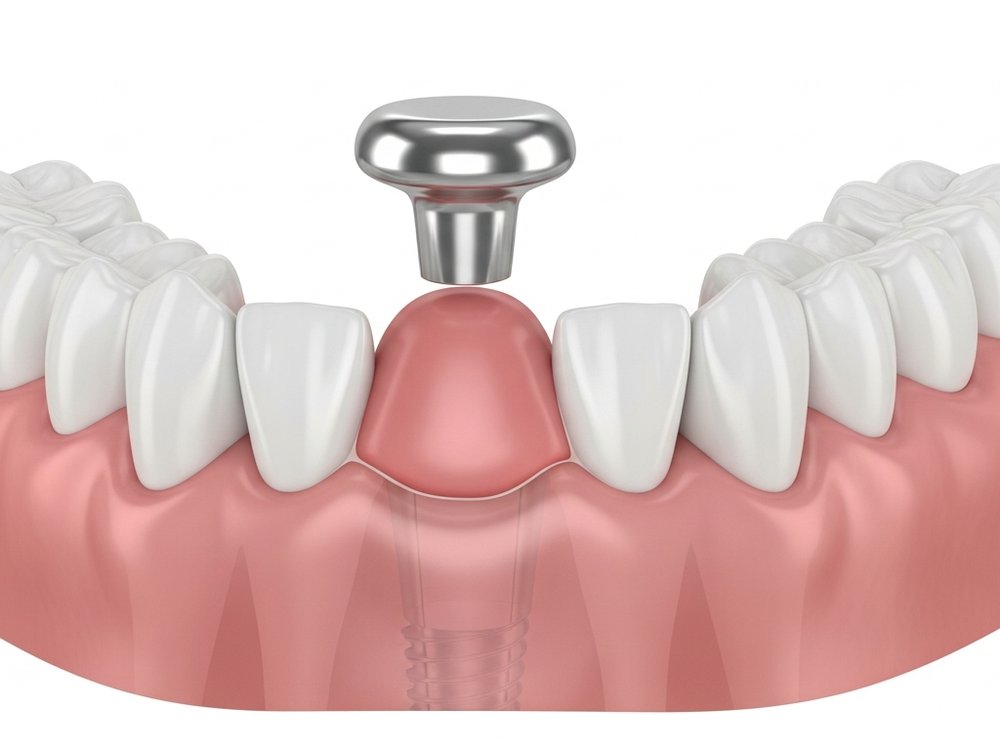
Single-tooth implants cannot be splinted to other implants. Here it is particularly important that the implant is not loaded in an uncontrolled way. During healing, any contact with the opposing teeth and any chewing load must be ruled out. If there is a danger of biting down hard on a solitary implant by accident, in the worst case that can cost the implant.
According to the guidelines of the German Society for Implantology (DGI) and the DGZMK, immediate loading means that the provisional or definitive restoration is placed on the implants within the first 24 hours.
For a time
Temporary implants
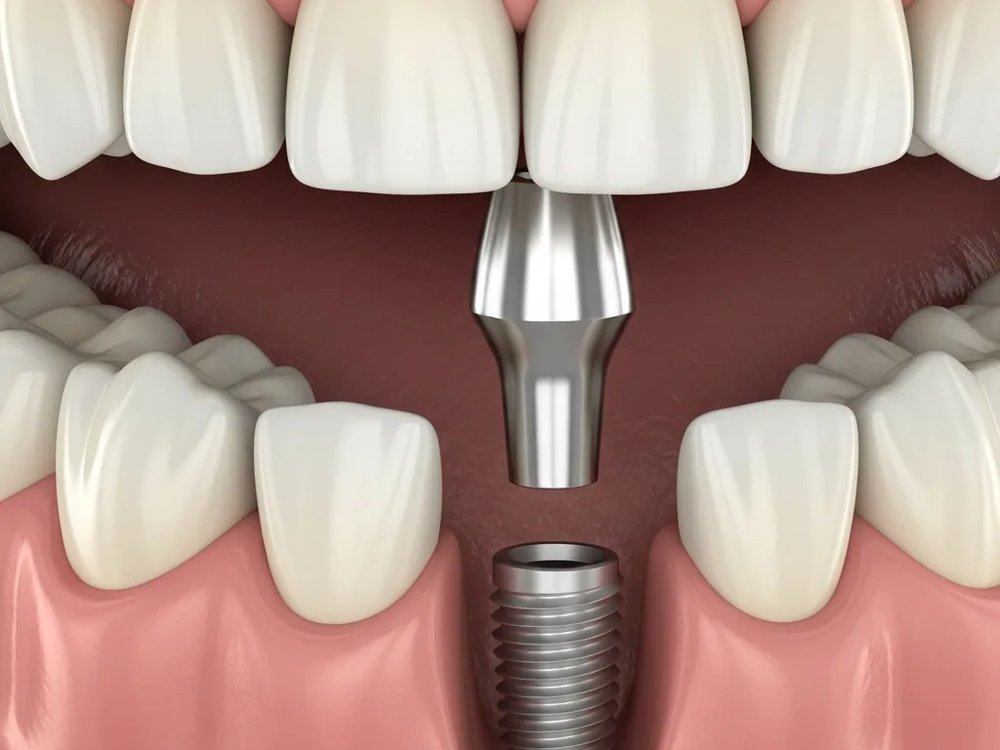
Temporary implants are a further option. They are placed between the definitive implants and carry a provisional restoration while those heal. When the new teeth are fitted, these auxiliary implants are removed. In augmented areas they also protect against unwanted loading.
In deciding on immediate loading, the quality and quantity of the bone available, the number of implants and how they are splinted or connected to one another all play a special part. Another indicator is the primary stability achieved immediately after placement. Primary stability results from the mechanical contact with the bone once the implant is in place; reliable mechanical stability through the implant thread prevents movement. Primary stability can only be established after the implant has been placed, and the torque needed to screw it in gives an indication of it.
The key points at a glance
- An implant needs several months to form a firm bond with the bone; during that time it should not be loaded.
- Loading too early generally leads to problems, up to and including the loss of the implant.
- Immediate loading is possible only in exceptional cases and with special planning; for the edentulous lower jaw there are options for it.
- With an immediate restoration a temporary is fitted, shaped so that it is barely loaded while chewing.
Answered briefly