Guided implantology — dental implants and prosthetics
Implants can be positioned and aligned with the help of computer-guided navigation.
Computer-guided placement is also possible. A planning program supplies the implantologist with detailed information on bone density, the position of the nerve canals and the exact location of the maxillary sinuses.
The implants can be positioned and aligned with the help of navigation. Placement with navigation systems is rare in Germany and means additional costs for the patient.
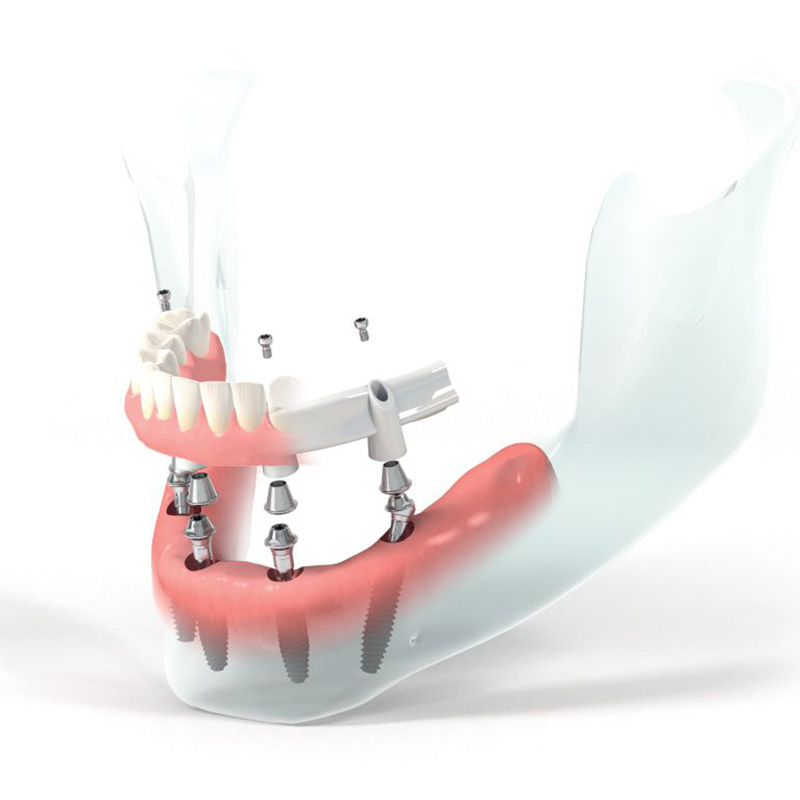
Guided implant placement with a surgical guide
Combining 3D diagnostics with detailed virtual planning of the procedure on the computer can make implant surgery less invasive. First, cross-sectional radiographs are produced for implant planning on the basis of three-dimensional computer images. The patient wears a special guide with markers in the mouth, and these appear on the radiograph. The X-ray data is then read into the computer, producing a three-dimensional picture of the teeth and jaws that can be used for virtual implant planning.
The aims are a thorough and reliable analysis of the implant site and exact implant positioning in line with the prosthetic plan. Virtual implants can be positioned and aligned on the computer, and the optimum length and correct diameter determined. This makes it possible to check whether there is enough bone around the implant and whether safe distances to nerves, tooth roots or a neighbouring implant are maintained. The dentist also receives detailed information about the bone structure and its quality, and about the course of the mandibular nerve or the maxillary sinuses.
With this approach the danger of damaging tooth roots, neighbouring teeth, the sinus or nerves during placement can be practically ruled out, because the anatomy is fully known and the planning follows the conditions actually present.